Venue Restriction Questions to Ask Your Asian Wedding Photographer: Insider Tips from a London Pro
Planning an Asian wedding in the UK involves coordinating multiple ceremonies, vibrant traditions, and often a large guest list. The venue you choose will have its own set of rules, and understanding those restrictions early makes the difference between a smooth day and a stressful one. With over 16 years of experience photographing South Indian, Hindu, Sikh, Muslim and Gujarati weddings across London and beyond, I have learned exactly which venue restriction questions asian wedding photographer conversations are vital. This guide shares what to ask every venue and every photographer before you book.
- What Are Venue Restrictions and Why They Matter for Asian Weddings
- Cultural Breakdown: Key Restrictions by Tradition
- Venue-Specific Insights: Lighting, Sound, and Timing
- My Professional Approach to Shooting Under Restrictions
- Real Wedding Example: A Challenge Solved
- Practical Tips for Couples: Questions to Ask Before You Book
- Frequently Asked Questions
What Are Venue Restrictions and Why They Matter for Asian Weddings
Venue restrictions are the rules set by the wedding location that limit how you can use the space. For Asian weddings, these rules often affect traditional elements that are central to your day. Open flames from a havan, loud dhol players during the baraat, the structure and decoration of the mandap, and the timing of multiple ceremonies all interact with venue policies. Many venues, especially larger or exclusive ones, also require photographers to have public liability and professional indemnity insurance – something I carry and can provide certificates for upon request.
The key is to identify these restrictions early. Asian weddings often run behind schedule because of the sheer number of rituals, and venues may impose noise curfews or strict setup and breakdown windows. Without asking the right venue restriction questions, you might discover on the day that your photographer cannot use flash, the mandap must be a certain height, or your caterer is not allowed in the kitchen. Being prepared lets your photographer adapt and still deliver stunning, natural images.
If you are looking for a photographer who understands these challenges, view my recent Asian wedding portfolios or check my availability for your date.
Cultural Breakdown: Key Restrictions by Tradition
Sikh Weddings (Anand Karaj)
Sikh ceremonies take place in the gurdwara or at a venue with a designated prayer space. Restrictions often relate to the positioning of the Guru Granth Sahib – photographers must be respectful and not obstruct any part of the ceremony. Outdoor seating for the langar or for guests can be limited and the baraat procession usually requires a clear outdoor area. Ask the venue about noise limits for the dhol players and whether they allow the large crowds that accompany the baraat. Many venues also restrict the use of flash near the Guru Granth Sahib, so your photographer needs to work with available light or a silent camera.

Hindu Weddings (Havan, Agni, Mandap)
The havan (holy fire) is central to Hindu weddings. Venues may prohibit open flames altogether or require a fire marshal and a specific fireproof base for the agni. The mandap structure itself often has height and weight restrictions, so confirm what is allowed before you order a heavy or tall mandap. Some venues also ban the use of certain materials like candles or oil lamps near fire alarms. Your photographer must know where to position themselves without blocking exits or fire extinguishers while still capturing the pheras.
Muslim Weddings (Nikkah)
At a Nikkah, the imam or qazi leads the ceremony, and many mosques or Islamic centres have strict rules about photography. Some allow only female photographers in the women’s area, and flash may be banned completely. Ask the venue whether the ceremony space is gender-separate and if your photographer is allowed to move freely. Outdoor space for the baraat or for group portraits might be limited, so plan for alternative portrait spots nearby.
Gujarati, Punjabi, Tamil and Bengali Nuances
Each community brings unique moments that photographers must capture, often under tight access. The Haldi ceremony involves turmeric paste and often takes place in a small room or outdoors – check if the venue permits food colouring that could stain carpets. Mehndi events are loud, with music and large gatherings; ask about noise restrictions and whether a separate space is available for the mehndi artist. For Punjabi weddings, the Jago and Giddha require space for dancing, while Tamil weddings include specific rituals like the Oonjal (swing) and Kashi Yatra. Bengali weddings feature the Shubho Drishti and Gaye Holud. Ask your venue about the timeline for multiple events – many have a strict curfew, and your photographer needs to schedule coverage accordingly to capture the Vidai or farewell without rushing.
Venue-Specific Insights: Lighting, Sound and Timing
Many venues restrict photography equipment. Some ban tripods because of safety concerns in crowded rooms, while others prohibit flash during the ceremony to avoid disturbing guests or the priest. Ask upfront whether your photographer can use ambient light or bring portable LED panels. Noise limits are common – dhol players may be asked to keep volumes below a certain level, or music must stop by a specified hour. This directly affects the baraat energy and the dancing at the reception.
Best portrait spots are often outdoors, but British weather can be unpredictable. Ask the venue about covered alternatives or indoor areas with good natural light. Weather contingencies are essential – a monsoon on the day can force the mandap inside, altering lighting and composition. Finally, timeline challenges when venues impose curfews mean every ceremony must run to schedule. Appoint a clear decision-maker from your family to keep things moving and create a detailed timeline that accounts for each ritual, travel between sites and setup time. Communicate that timeline to your photographer well in advance.
My Professional Approach to Shooting Under Restrictions
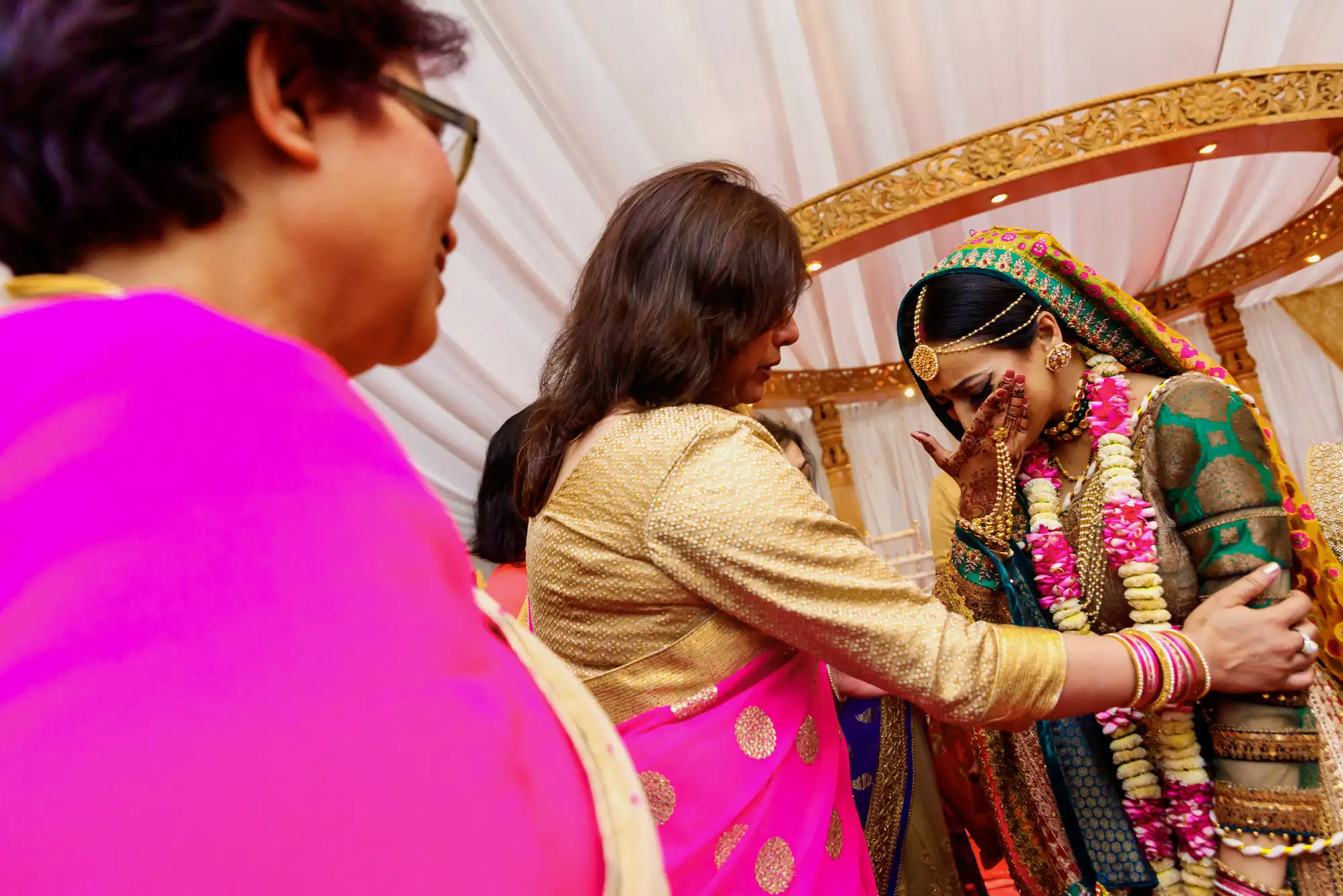
When a venue bans flash, I rely on fast lenses and a steady hand. I increase the ISO to capture ambient light while keeping noise low, and I use available window light or candlelight to create mood. If the baraat is constrained by a small courtyard, I change my angle to shoot from above or use a wide lens to compress the energy. For fast-moving ceremonies with tight access – like the quick pheras around the fire – I pre-visualise positions and move discreetly between set shots. My storytelling approach means I look for candid reactions, not just posed portraits, so even a narrow corridor can become a perfect framing for a tearful moment.
I communicate with the venue coordinator before the day to understand every restriction. I ask about tripod use, flash zones and whether I can stand on chairs or use a ladder. If the venue requires insurance certificates, I provide them immediately. This preparation lets me work with confidence, knowing I will not be stopped mid-ceremony.
Practical Tips for Couples: Questions to Ask Before You Book
Use this checklist when visiting venues and interviewing photographers:
- Ask the venue about mandap restrictions. Enquire about height and weight limits, setup time, and whether you need a fire blanket under the havan.
- Clarify noise restrictions. Find out if dhol players, loud music, or live bands are allowed, and if there is a curfew or decibel limit.
- Confirm you can bring your own caterer. Many venues restrict outside catering, and Indian cuisine often requires dedicated kitchen space.
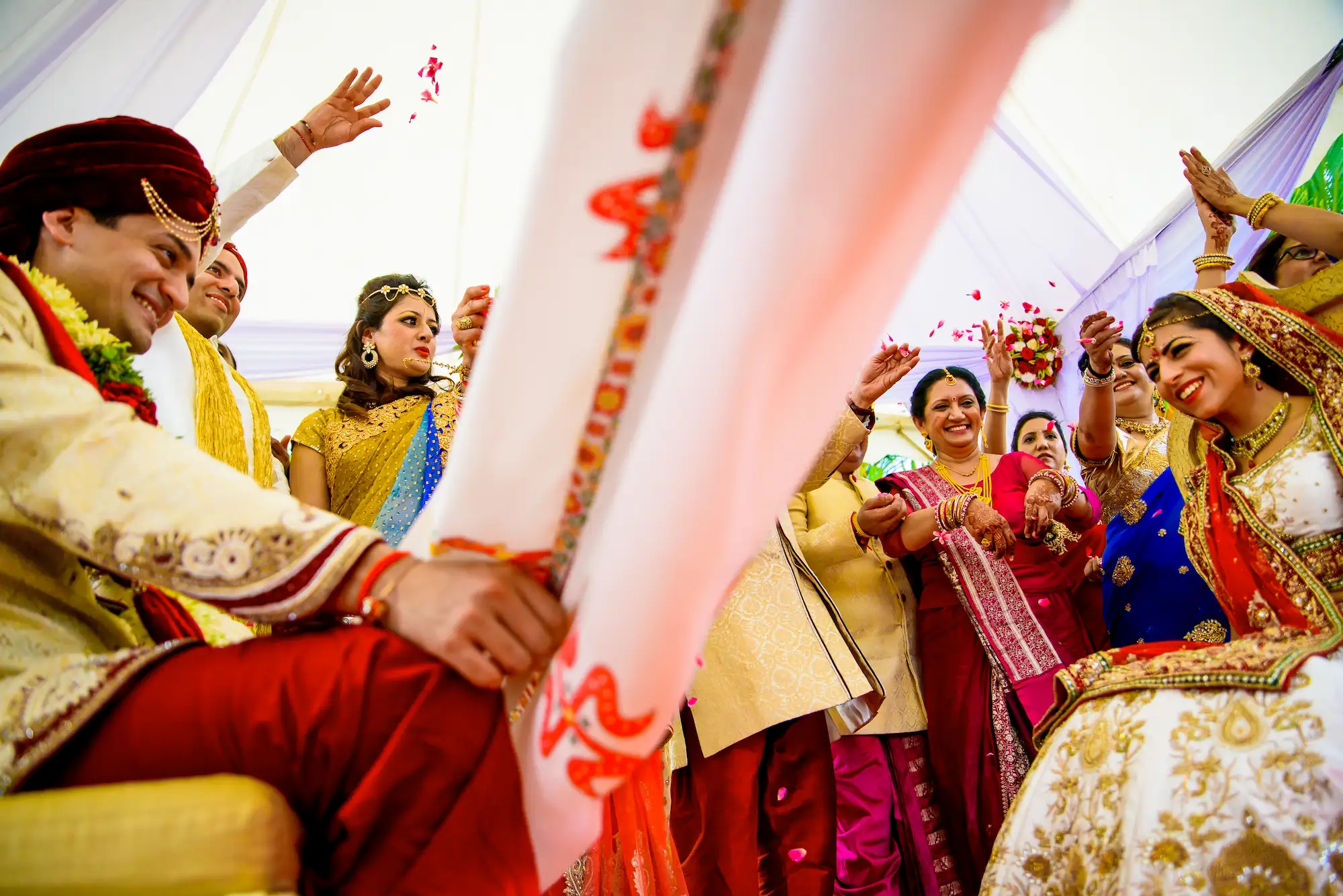
- Ask about outdoor space for the baraat. Is there a clear route for a procession? Does the venue allow confetti or flower petals that might stain paving?
- Check the setup and breakdown timeline. How early can you arrive, and when must you leave? This affects when your photographer can start and finish.
- Request a separate space for mehndi. Mehndi applications need seating and good light – a side room is ideal.
- Ask about parking capacity. Asian weddings attract large family groups; ensure there are enough spaces for guests and suppliers.
- Discuss late-running events. Ask your photographer if they offer extension coverage for ceremonies that overrun.
- Confirm photographer insurance. Ask your photographer for a certificate of public liability and professional indemnity insurance – many venues require it.
- Appoint clear decision-makers early. It is recommended to have a single point of contact for the venue and suppliers to keep communication fast.
Ready to discuss your Asian wedding photography? Get in touch to check my availability and I will walk you through how I handle venue restrictions.
Frequently Asked Questions
Do I really need a photographer with public liability insurance?
Many larger or exclusive venues require photographers to have public liability and professional indemnity insurance. It protects you if equipment damages the venue or if someone is injured. Always ask your photographer for an insurance certificate before signing a contract.
What if my wedding runs late? Can my photographer stay longer?
Asian weddings often run behind schedule. Professional photographers plan for flexibility and may offer extended coverage subject to availability. Discuss this during your consultation so you know the cost and whether they can stay to capture the Vidai or the last dance.
Are there restrictions on using flash during the ceremony?
Some venues and religious spaces ban flash to avoid disturbing the priest, the couple, or the atmosphere. Ask your venue and your photographer how they will handle low-light situations if flash is not allowed. A skilled photographer can use fast lenses and high ISO to create beautiful natural-light images.
Can the venue stop my dhol players or loud music?
Yes. Most venues have noise limits and curfews. Ask about decibel restrictions and the latest time you can play amplified music. If the baraat is a key part of your day, confirm the outdoor space and noise policy before booking.
What should I do if the mandap does not fit the venue?
Check the venue’s height and weight restrictions for structures before you order your mandap. If the mandap is too tall, your decorator may need to modify it, or you may need to choose a different venue. Your photographer can advise on how to position the mandap for the best light and composition.
Understanding venue restriction questions is essential for a seamless Asian wedding. Ask every question early, share your timeline with your photographer and trust their experience to adapt. Your wedding day should be about celebrating your love – not worrying about rules. With the right preparation, you and your photographer can create images that honour every tradition, no matter what the venue throws at you. If you would like to see how I approach these challenges, take a quiet look through my Asian wedding galleries – each one tells a story of restrictions turned into art.