INDIAN WEDDING PHOTOGRAPHY SPECIALISATION
Committed to the Craft of Great Indian Wedding Photography in London
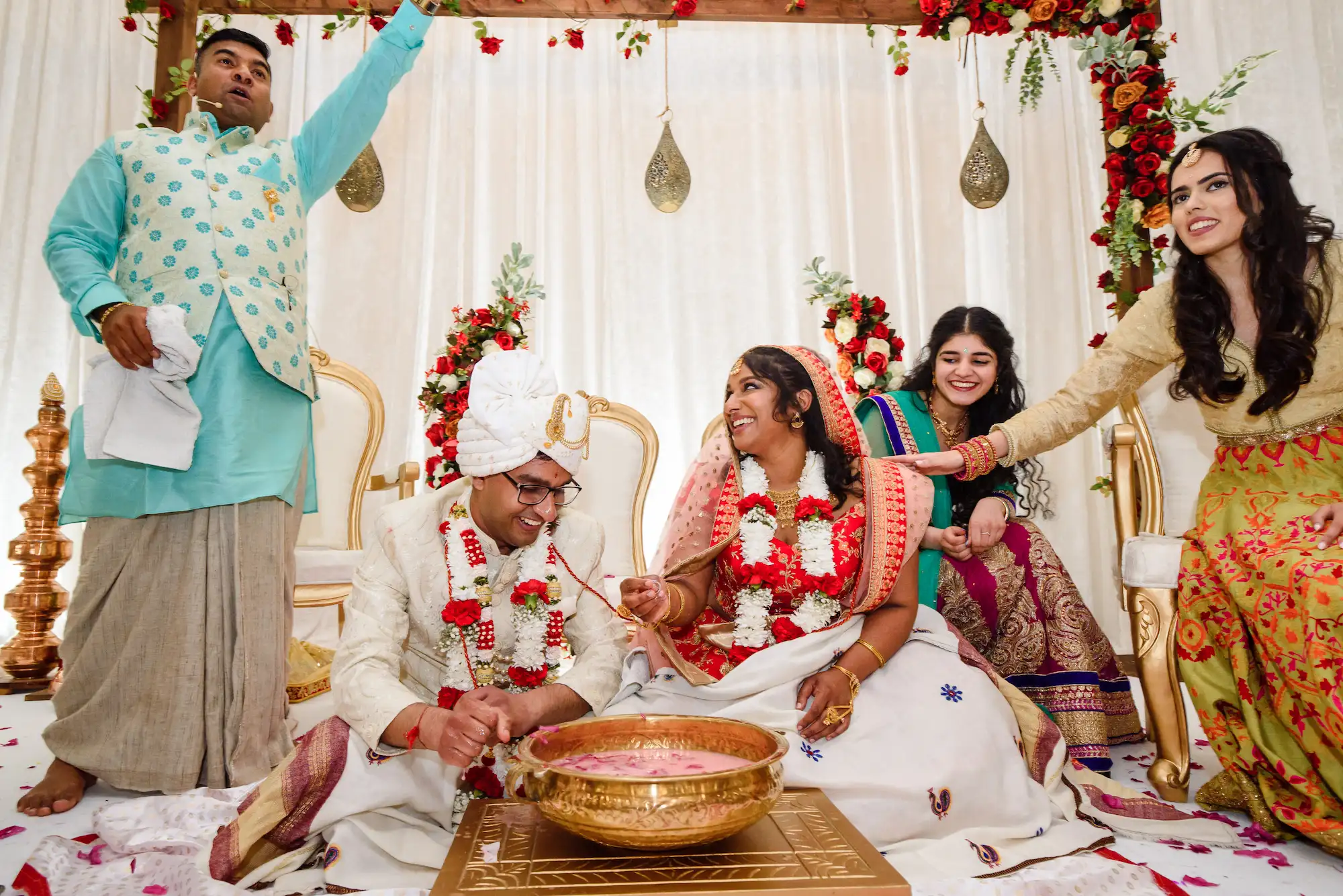
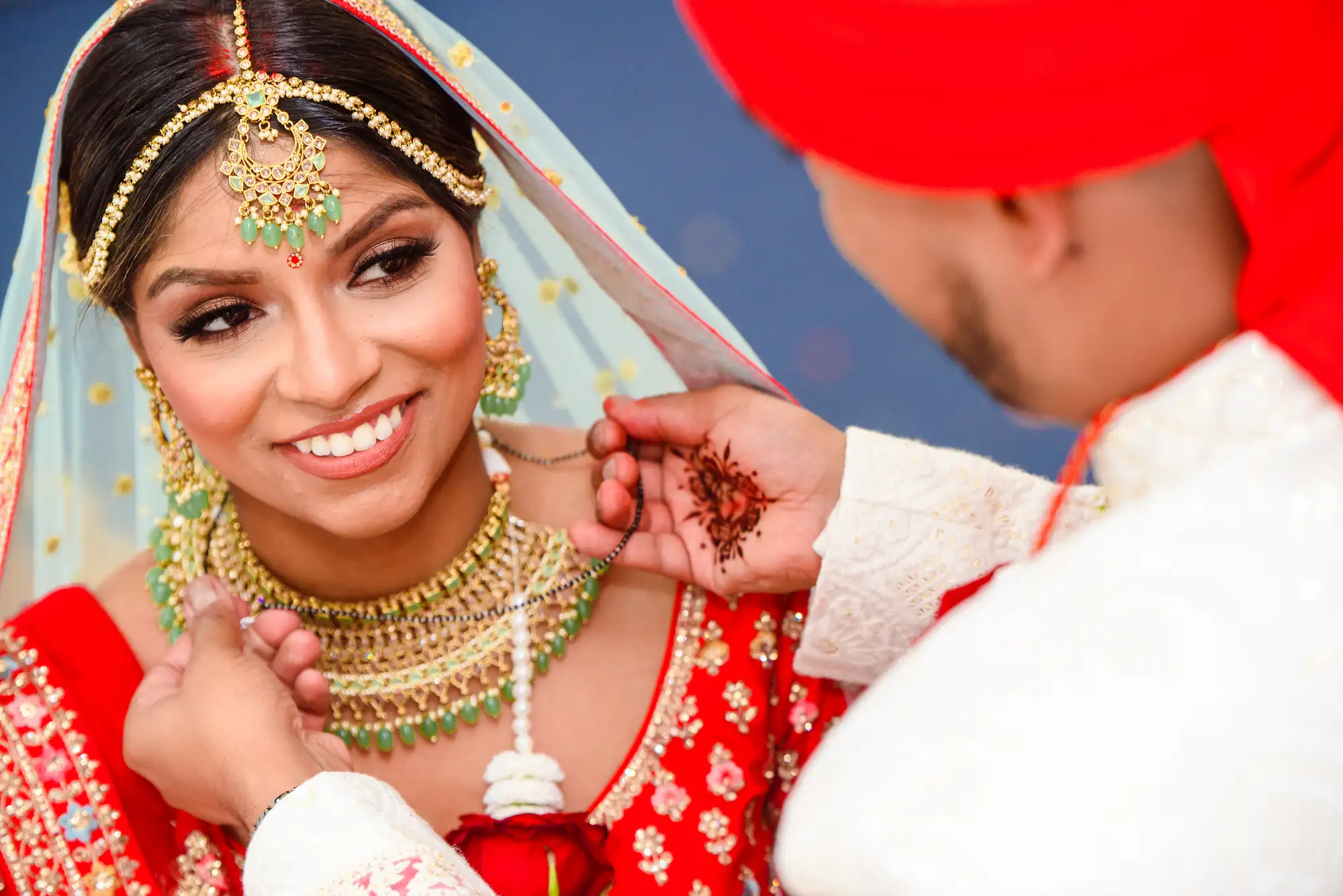
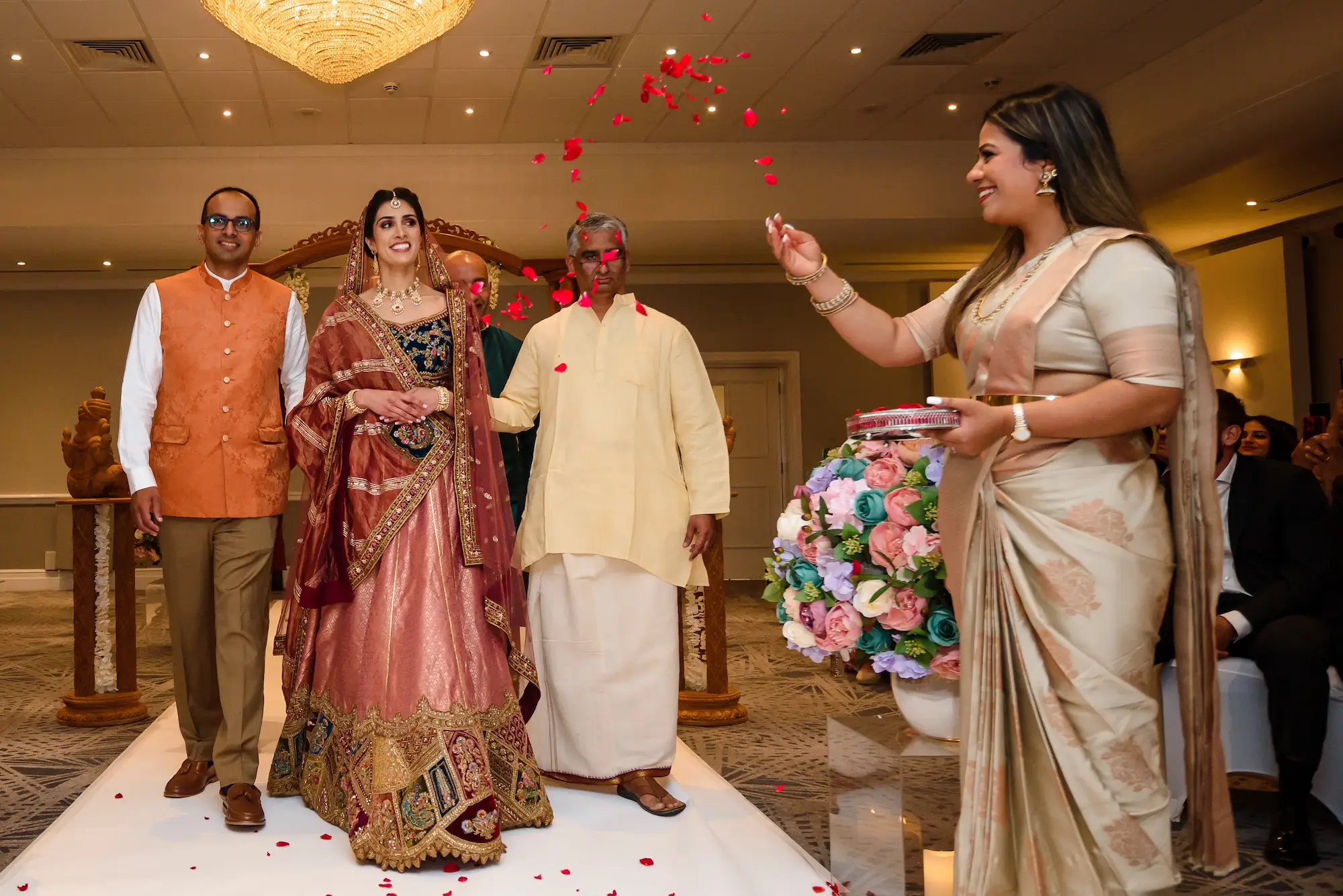
In Indian culture, amongst other things, weddings are all about beautiful traditions and blessings from elders in the run-up to your special day. These religious and cultural customs are at the core of Indian weddings. Rated among one of the best Indian wedding photographers, I will capture all the cultural and traditional activities for you. I am truly in touch with the cultural and traditional aspects of an Indian wedding, together with the individualism, fun and colour that accompanies them.
Trusted for Delivering Emotional and Meaningful Indian Wedding Photography


indian wedding photography

If you are searching for Indian wedding photography London that captures the colour, emotion and detail of your celebration, you have come to the right place. I am Jermaine Chandra, a London-based photographer who has spent over 16 years documenting Indian, Sikh, Hindu, Gujarati and Tamil weddings across the UK and abroad. My approach is candid, creative and respectful – I blend into the crowd so that every fleeting moment, from the first pheras to the tearful vidaai, is preserved naturally. Whether your wedding is at a grand mandap in a hotel ballroom or a traditional gurdwara ceremony, I bring both technical skill and cultural understanding to every frame.
This service page explains how I work, what rituals I cover, and why my style suits the energy of an Indian wedding. You will also find practical tips in this section for your own celebration:
1. Understanding Indian Wedding Photography London
2. Cultural Breakdown of Key Traditions
3. Venue Insights for Indian Weddings in the UK
4. My Professional Approach
5. Real Wedding Example: Challenge and Solution
6. Practical Tips for Your Indian Wedding
Understanding Indian Wedding Photography London
Indian weddings are multi-day events packed with rituals, emotions and a huge cast of family members. Unlike a traditional English wedding, the timeline is fluid, the ceremonies are rich in symbolic gestures, and the photography must adapt quickly. Indian wedding photography London requires more than just a good camera – it demands knowledge of each tradition, the ability to work under tight timelines and a calm, respectful personality.
Over the years I have photographed Hindu weddings featuring the saptapadi (seven steps), Sikh Anand Karaj ceremonies at gurdwaras, Gujarati and South Indian traditions, plus pre-wedding events like haldi, mehndi, sangeet and jago. Every community has its own way of celebrating, and I make sure I understand the sequence of events before I arrive. This preparation allows me to anticipate key moments without interrupting the flow of the day.
Cultural Breakdown of Key Traditions
Hindu Weddings: Pheras, Mandap and VidaAi
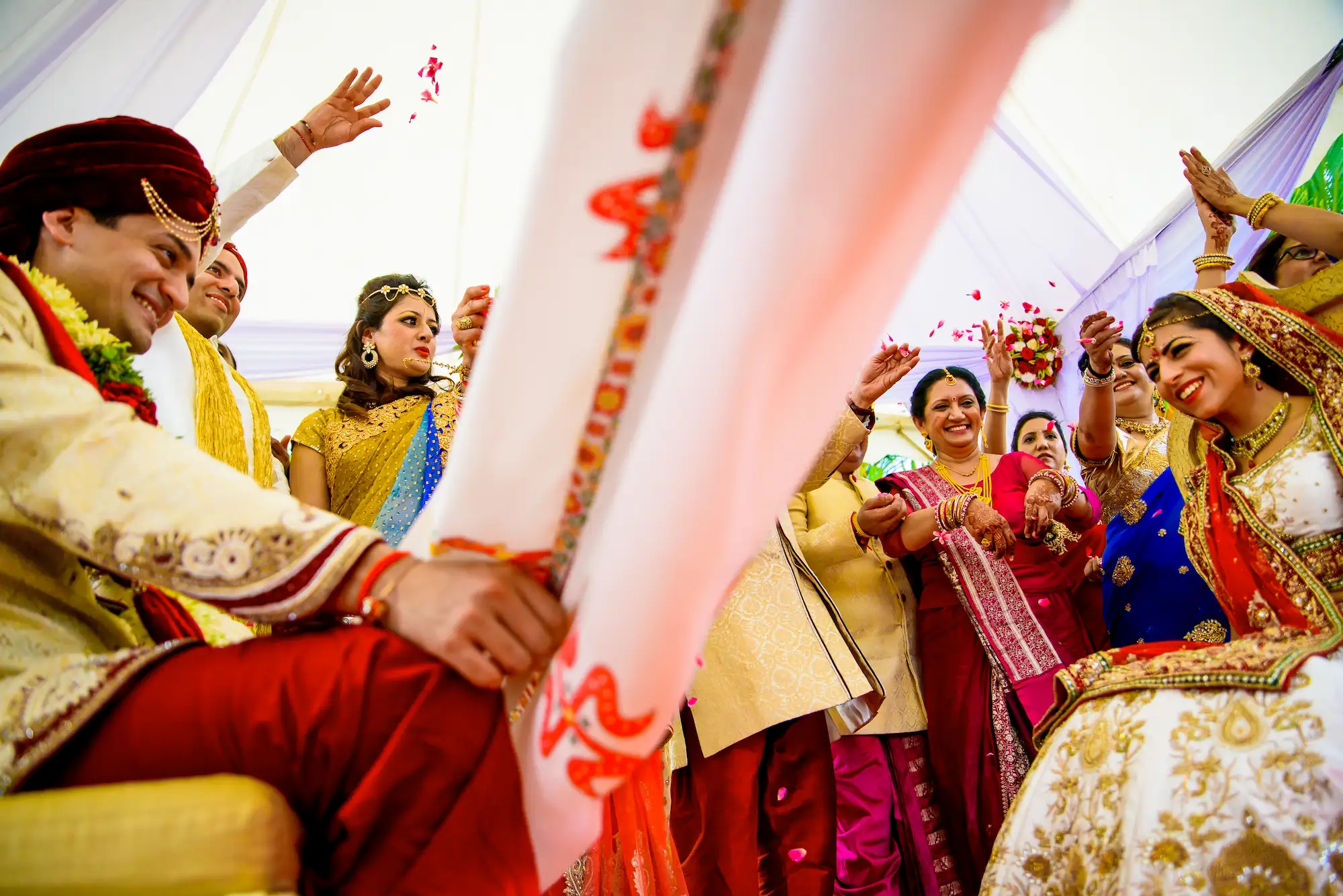
The core of a Hindu wedding is the pheras – the seven circles around the sacred fire. Each phera represents a vow, and the couple’s expressions shift from nervous joy to solemn commitment. I position myself close enough to capture the flames reflecting on the bride’s dupatta, yet discreetly so that I do not disturb the priest or the family. The mandap is often the most decorated area of the venue, with rich fabrics and floral garlands. Lighting can be challenging here: the fire provides a warm glow, but the surrounding ambient light is often low. I rely on fast prime lenses and a steady hand to keep the mood intimate without using intrusive flash.
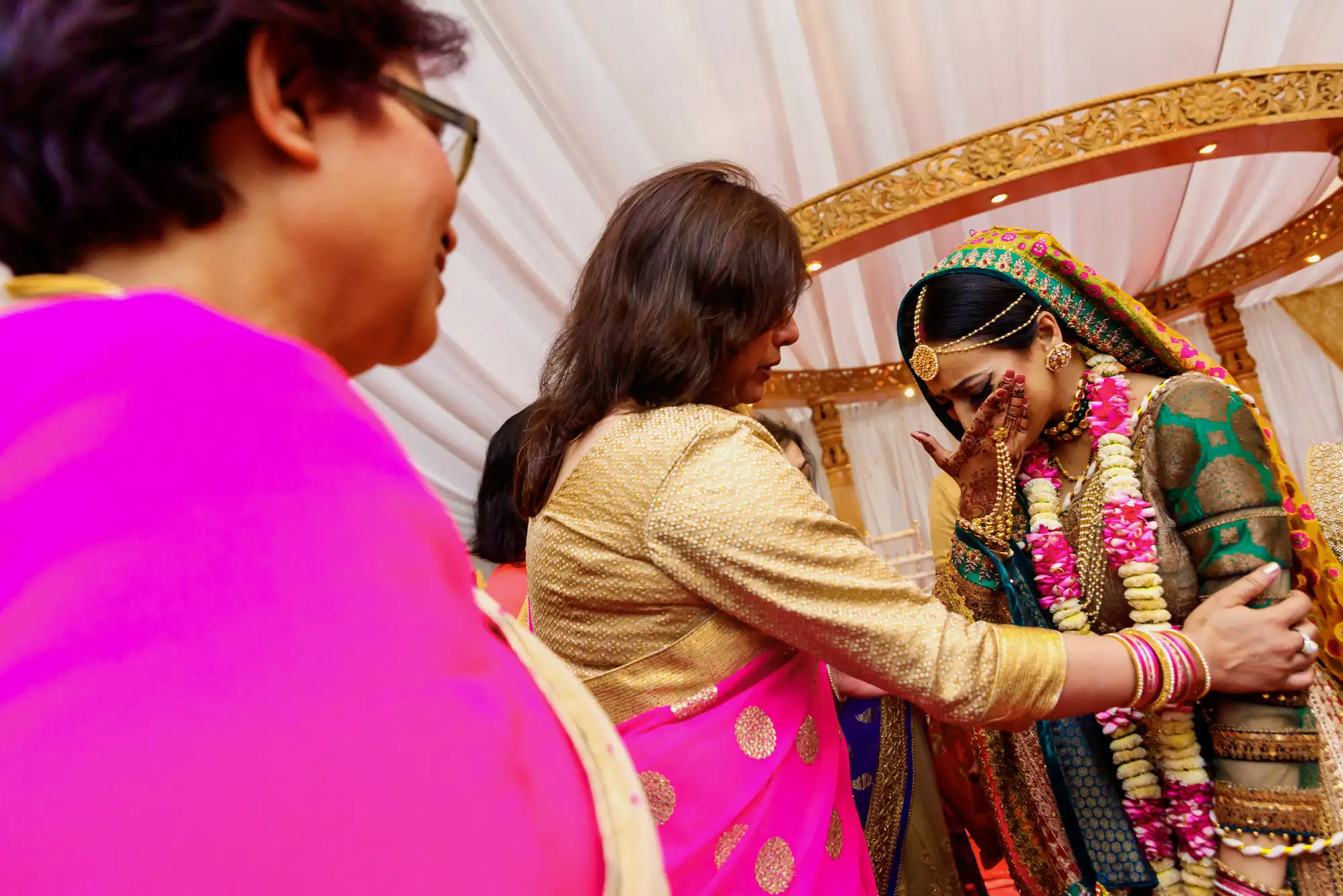
After the pheras comes the vidaai – the emotional goodbye as the bride leaves her family home. This is a moment where tears flow freely and it is one of the most powerful images of the day. I stay at a respectful distance but keep my camera ready for the raw embrace between mother and daughter.
Sikh Weddings: Anand Karaj
Sikh ceremonies take place in a gurdwara, where the Guru Granth Sahib is present. Photography inside the prayer hall must be unobtrusive and respectful. I rarely use flash during the Anand Karaj and I avoid moving in front of the congregation. Instead, I use a long lens to capture the couple sitting beside the Guru Granth Sahib, the laavan (four hymns) being recited and the proud smiles of the families. The lighting in a gurdwara is usually even and soft, which works beautifully for candid portraits. After the ceremony, the langar (community meal) provides relaxed opportunities for group shots and natural interactions.
Gujarati and South Indian Traditions
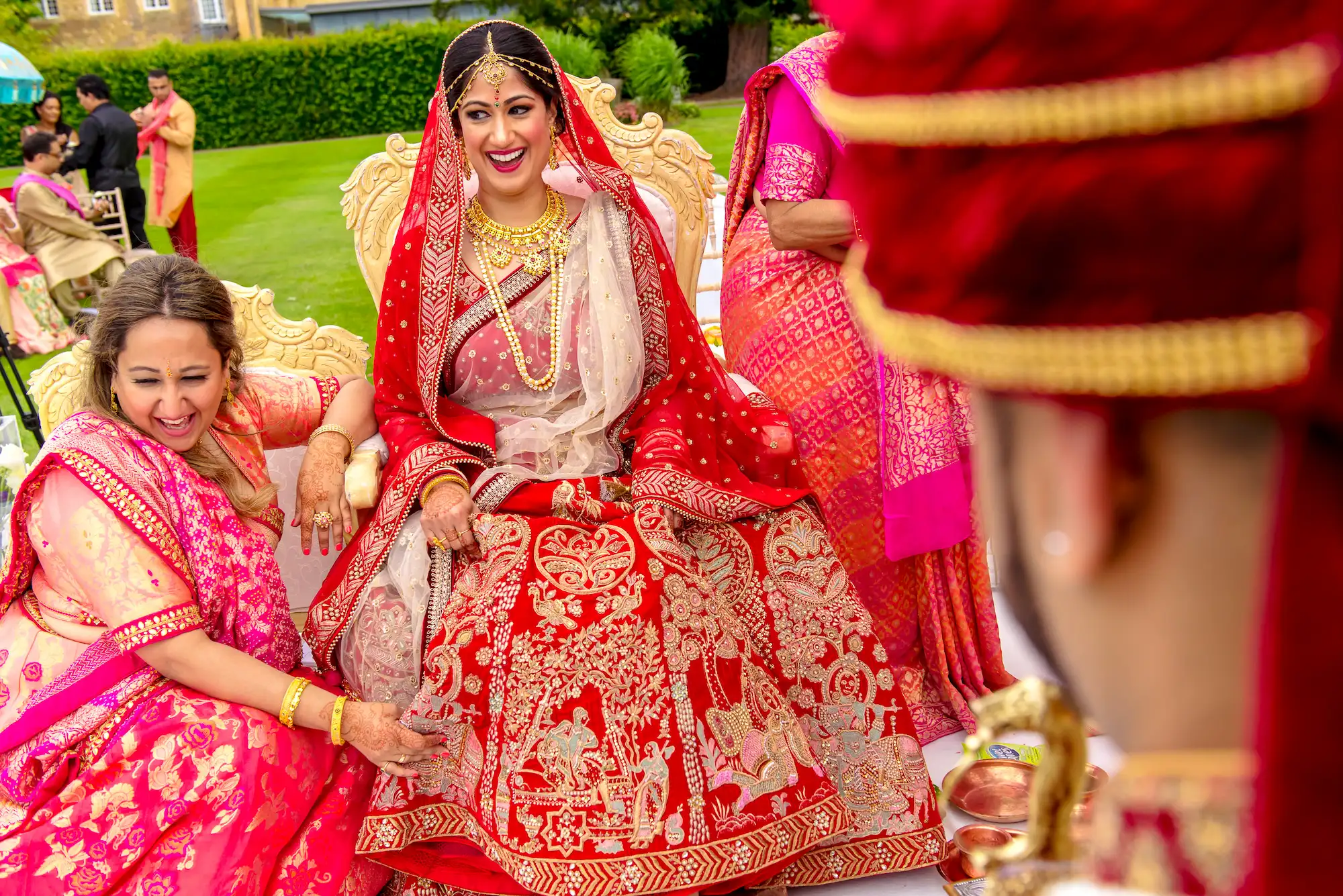
Gujarati weddings often include a lively garba or dandiya night before the main ceremony. The energy is infectious and I love photographing the swirling skirts and the clattering sticks. For South Indian weddings, the rituals are more intricate – the kanyadaan, the tying of the mangalsutra and the nalangu (a playful post-ceremony game). Each gesture has meaning and I make sure I capture the small details: the bride’s hands decorated with mehndi, the groom’s veshti and the flower garlands that are exchanged. My experience with Tamil families means I know where to stand to avoid blocking the priest’s view while still getting close-up shots of the sacred thread being tied.
Haldi, Mehndi, Sangeet and Jago
Pre-wedding functions are full of colour and laughter. The haldi ceremony, where turmeric paste is applied to the couple, takes place in natural daylight – often in a garden or courtyard. I use the golden hour to capture the playful smearing of yellow paste and the wide grins of siblings. Mehndi night is more relaxed; the focus is on the intricate henna patterns on the bride’s hands and feet. I often shoot close-ups with a macro lens, then step back to show the bride surrounded by her friends. The sangeet is a high-energy musical evening with choreographed dances. I use a fast shutter speed to freeze the dancers mid-spin and a wide-angle lens to capture the entire stage. For a jago (a Punjabi and Gujarati tradition where the family goes door to door singing), I follow the group with a small camera and available light, preserving the unscripted joy.
Venue Insights for Indian Weddings in the UK
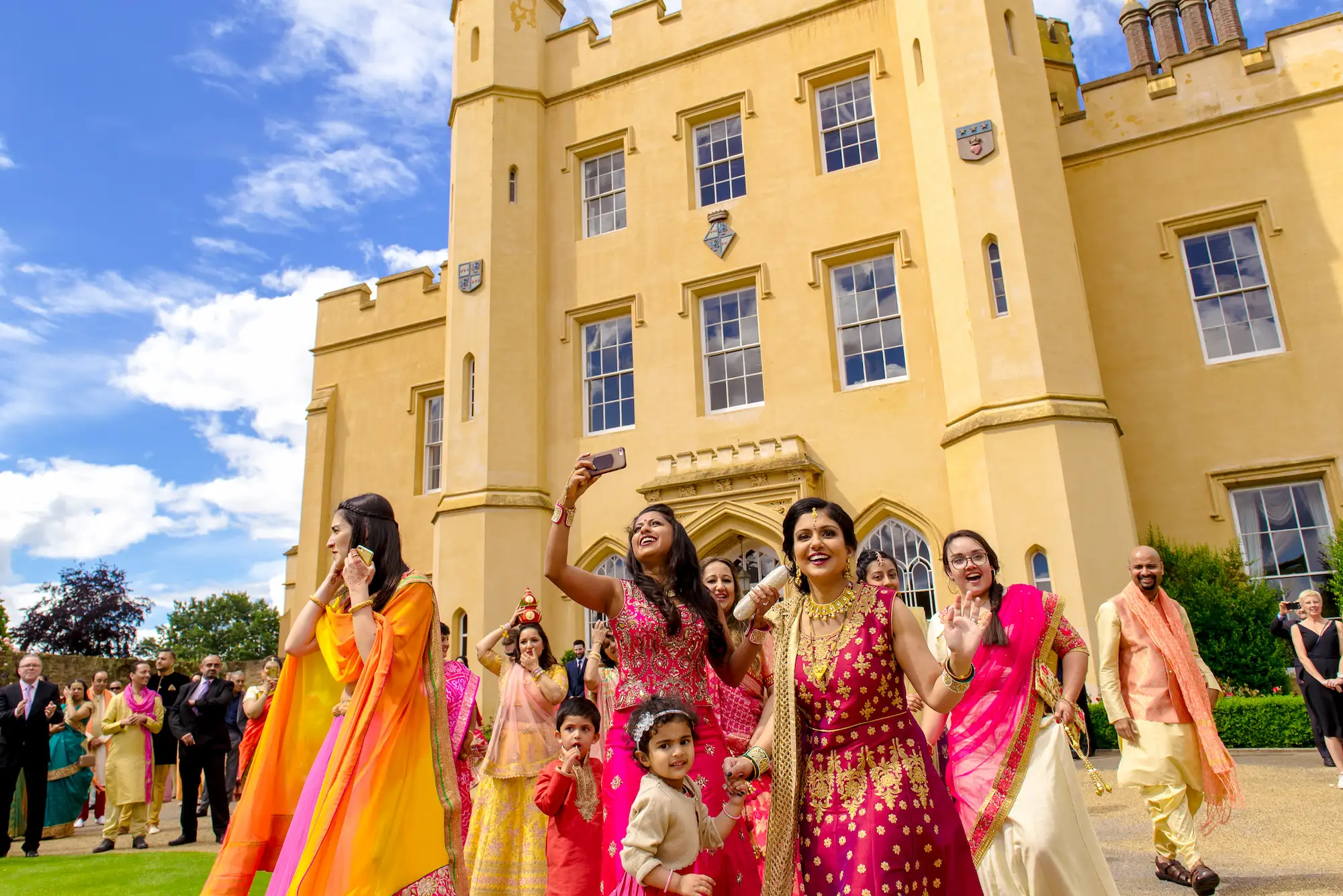
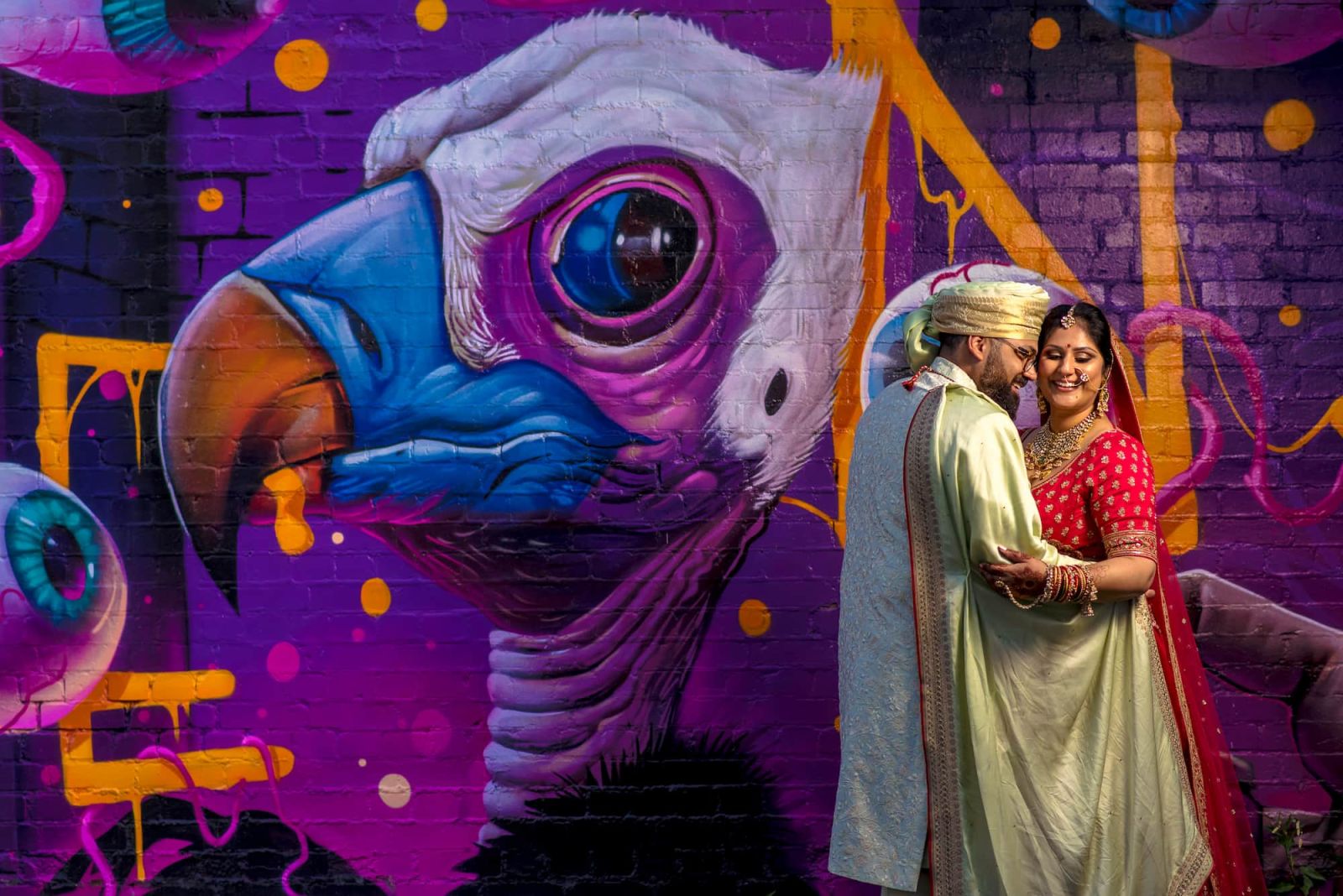
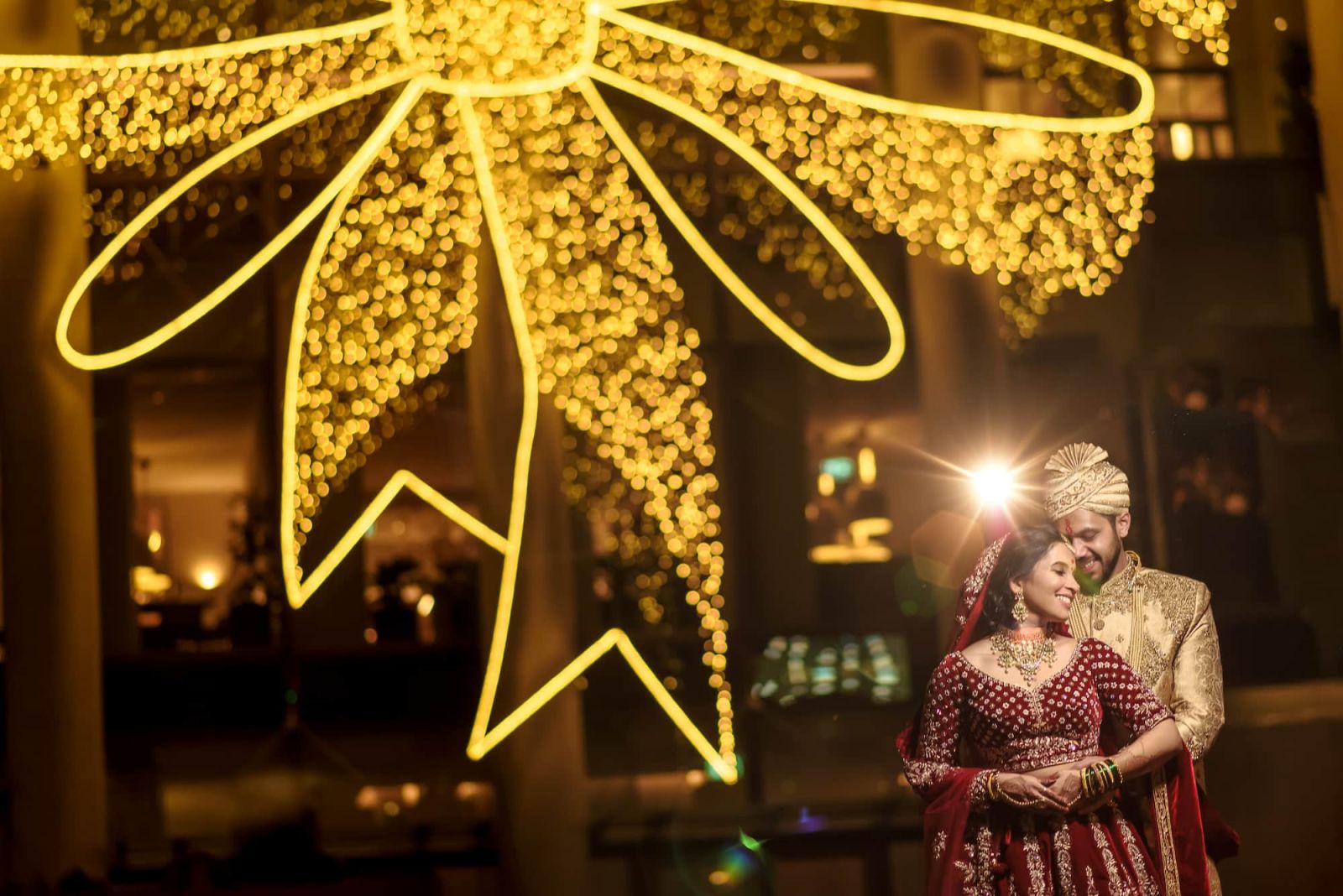
Indian weddings in London are held at a huge variety of venues – from historic castles like Belvoir Castle or Elmore Court to city event spaces such as 116 Pall Mall. Each venue brings its own lighting conditions and restrictions. At a hotel mandap, the ceiling height and chandeliers can create mixed lighting; I often use a combination of off-camera flash and natural window light to balance the exposure. Temple and gurdwara venues have strict rules about where photographers can stand. I always liaise with the venue coordinator beforehand and arrive early to scout the best positions. For outdoor portrait sessions, I look for spots with clean backgrounds – a patch of green or a brick wall – but I always respect the weather. British weather is unpredictable, so I carry weather-sealed gear and have a backup plan for indoor portraits. Timing is critical: the most important rituals often happen between late morning and early afternoon, so I arrive two hours before the scheduled start to prepare and to capture the couple getting ready.
My Professional Approach
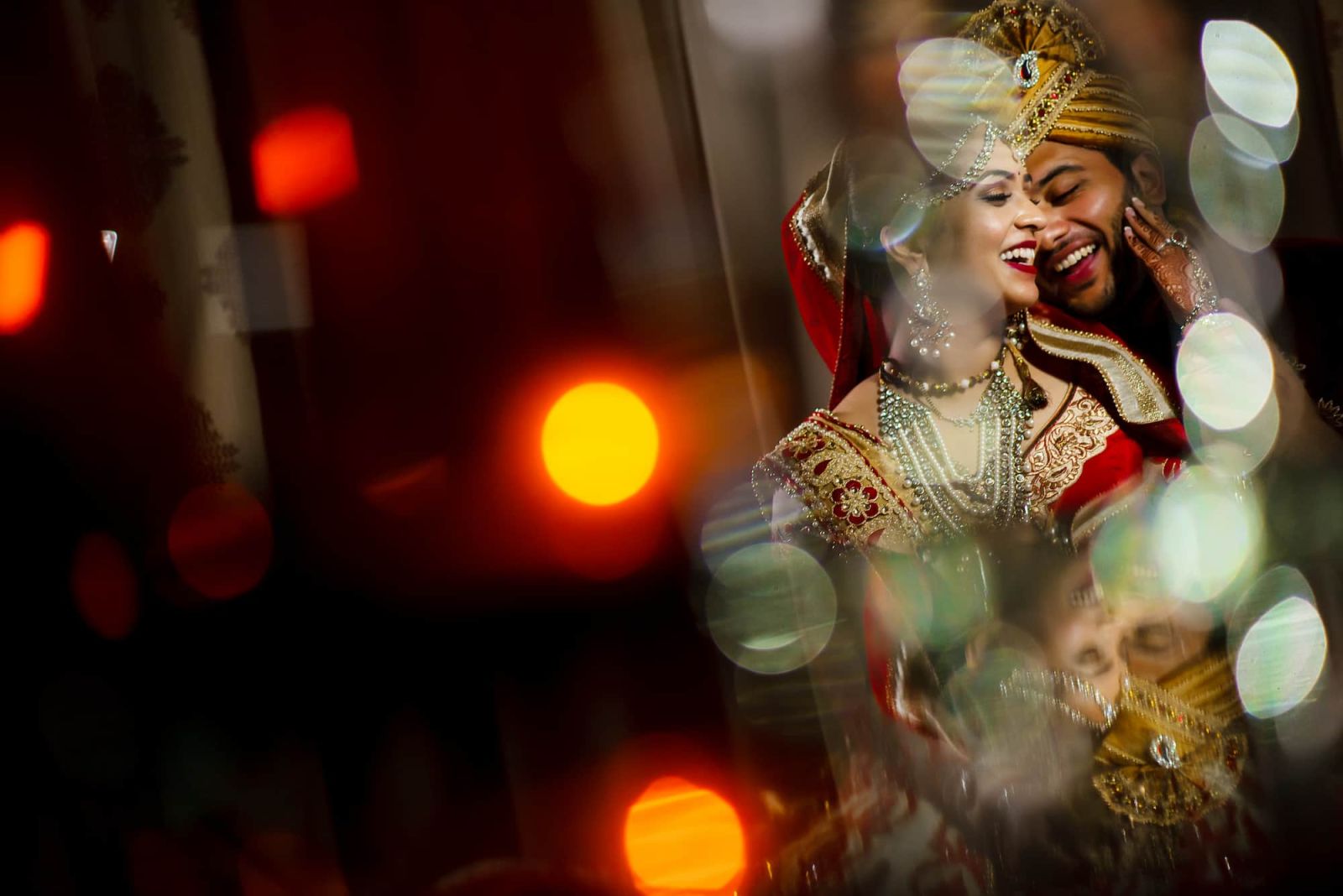
My style is documentary-led with a creative twist. I do not stage moments; I observe and react. For Indian weddings, this means I stay alert for the unguarded look a bride gives her mother, the laughter of cousins during the sangeet and the silent prayers before the ceremony. I understand that timelines are tight – between the baraat arrival, the multiple rituals and the meal service, there is rarely time for lengthy portrait sessions. I work quickly and efficiently, directing family groups with clear, calm instructions while still grabbing candid frames in between. My lighting strategy is to use natural light wherever possible, but I carry a small flash for evening events and dark mandap interiors. I know how to work with priests and family elders – I introduce myself before the ceremony, explain where I will be standing, and ask if there are any areas I should avoid. This respect helps me earn trust and access to intimate moments. I also take care of camera-shy couples: I keep my distance, use a longer lens, and never push them to smile. Often the most natural portraits come when they forget I am there.
If you are looking for an indian wedding photographer london who combines technical skill with cultural sensitivity, I invite you to check my availability for your Indian wedding.
Real Wedding Example: Challenge and Solution
One of my most memorable weddings was a Gujarati-Hindu fusion at a London hotel. The couple had a tight schedule: the morning haldi, then a quick change for a civil ceremony at a registry office, followed by an evening garba and the main Hindu wedding the next day. The challenge was the rain – it poured for the entire haldi, meaning the outdoor garden plans were impossible. I quickly adapted by finding a covered courtyard with large windows that let in soft, even light. I positioned the couple near a white wall to bounce the light and I used a fast lens to keep the ISO low. The result was a series of warm, bright images that looked as if they were taken in sunshine. The family was relieved and the bride later told me that those haldi photos were her favourites. The experience reinforced my ability to think on my feet and to bring out the best in any situation.
Practical Tips for Your Indian Wedding
1. Share your full wedding itinerary with your photographer at least two weeks before the day. Include start times for every ritual, contact numbers for the priest and venue coordinator and any cultural details that might affect photography.
2. Choose a venue with good natural light for the morning functions like haldi and mehndi. A room with large windows or a sheltered outdoor area makes a huge difference to the quality of candid shots.
3. Plan a portrait slot of 20 minutes after the main ceremony but before the meal. This is the best time for couple portraits and family groups without distraction.
4. Discuss flash restrictions with your venue. Some gurdwaras and temples do not allow flash inside the prayer hall – your photographer should be comfortable shooting in available light.
5. Assign a family member or friend as a point of contact for the photographer. They can help round up relatives for group shots and keep the schedule on track.
6. Trust your photographer to capture the candid moments. You do not need to pose or look at the camera constantly – the best images come from genuine emotion.
For a full look at my work, view my Indian wedding photography portfolio to see real weddings from start to finish.
Frequently Asked Questions
Do you cover all Indian wedding events, including haldi, mehndi and sangeet?
Yes. I cover everything from the pre-wedding functions to the morning-after brunch. My full-day coverage ensures that no moment is missed, whether it is the haldi paste being applied or the final goodbye at the vidaai. I tailor the hours to your specific itinerary.
How do you handle low light during the pheras or in a gurdwara?
I use fast prime lenses with wide apertures (f/1.4 or f/1.8) and high ISO settings that still produce clean, grain-free files. I avoid flash during sacred rituals to respect the ceremony. For evening events like the sangeet, I use a small off-camera flash to add warmth without being intrusive.
Can you photograph a ceremony that includes both Hindu and Sikh elements?
Absolutely. I have documented many multi-faith weddings. I take the time to understand the order of events for each tradition and adjust my positioning accordingly. The same respect for both ceremonies ensures that the resulting images honour both families’ customs.
How soon will we receive our photos after the wedding?
I typically deliver a preview images within one week and the full edited gallery within eight to twelve weeks. Each image is individually colour-graded and retouched. You can view, download and share the gallery with family and friends.
Do you travel outside London for Indian weddings?
Yes. I cover Indian weddings across the UK and also travel abroad for destination weddings. I have photographed weddings in Birmingham, Leicester and around the UK at venues like De Vere Beaumont Windsor and Hedsor House . I have also documented Indian weddings in New York, Trinidad, Italy and India. I quote travel and accommodation separately if required.
Being an Indian wedding photographer, I have a keen passion for all the beautiful traditions associated with Indian weddings. Customs and decorations teeming with colour, intricate henna, delicious food, cultural and religious processions – all of which I aim to capture through my distinct style as an Indian Wedding Photographer in London, UK.
If you are ready to discuss your wedding plans, get in touch to secure your date. I book only a limited number of Indian weddings each year to maintain quality, so early enquiry is recommended. You can use the form at the bottom of this page to get in touch directly.
Contact Me
For more information on availability, pricing or to arrange a consultation please fill out your details below: